Description
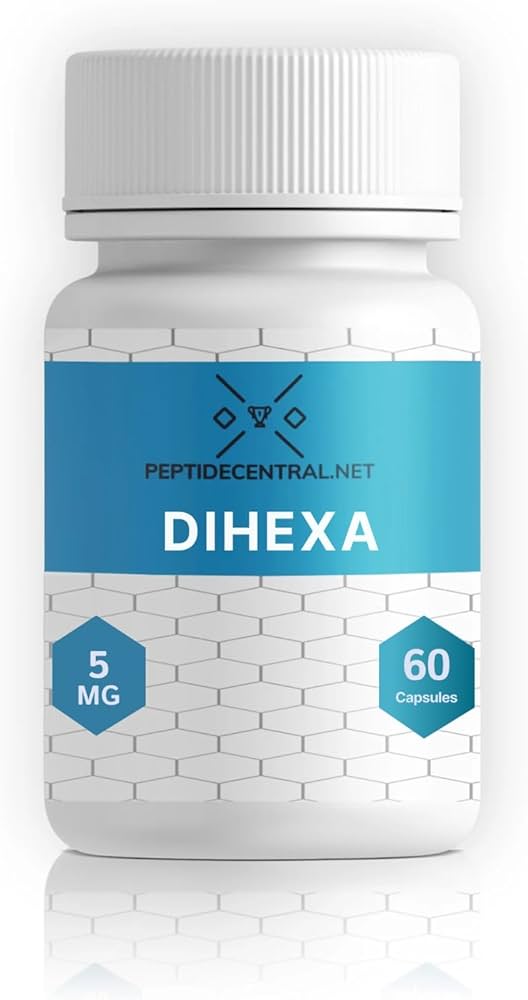
Dihexa (5mg/capsule), 60 Capsules is a high-purity, research-grade nootropic compound supplied in oral capsule form. Each capsule contains 5mg of Dihexa (N-hexanoic-Tyr-Ile-(6) aminohexanoic amide), providing a total of 300mg across 60 capsules per bottle. This product is intended exclusively for laboratory and scientific research purposes, including in vitro studies, animal models, biochemical assays, or experimental investigations into neurobiology and cognitive mechanisms. It is not approved for human consumption, therapeutic use, medical treatment, dietary supplementation, or veterinary applications by any regulatory agency (e.g., FDA, EMA). All use must be conducted by qualified researchers adhering to strict laboratory protocols.
Key Specifications
- Chemical Name: N-hexanoic-Tyr-Ile-(6) aminohexanoic amide (also known as PNB-0408)
- Molecular Formula: C₂₇H₄₄N₄O₅
- Molecular Weight: 504.66–504.28 g/mol
- CAS Number: 1401708-83-5
- Purity: ≥98–99% (verified by HPLC; third-party Certificate of Analysis recommended)
- Form: Encapsulated powder (oral capsules for research convenience)
- Appearance: White to off-white capsules
- Quantity: 60 capsules × 5mg = 300mg total
- Storage: Store in a cool, dry place away from light and moisture; refrigerate or freeze for long-term stability if needed. Follow lab guidelines for handling and stability post-opening.
Research Background and Mechanism
Dihexa is a small, orally active oligopeptide derived from angiotensin IV analogs. Developed initially at Washington State University and advanced through entities like M3 Biotechnology, it crosses the blood-brain barrier with high efficiency. Dihexa acts as a potent hepatocyte growth factor (HGF) mimetic, binding with exceptionally high affinity (picomolar range) to HGF and potentiating its activity at the c-Met receptor. This interaction promotes HGF dimerization, c-Met phosphorylation, and downstream signaling cascades (e.g., PI3K/AKT pathways) that support:
- Synaptogenesis (formation of new synapses)
- Neurogenesis (generation of new neurons)
- Dendritic arborization and synaptic plasticity
- Cognitive enhancement in models of impairment
Preclinical animal studies (e.g., scopolamine-induced deficits, Alzheimer’s-like models) have demonstrated Dihexa’s ability to restore spatial learning, improve memory performance, increase synaptic density, and reverse cognitive deficits at extremely low concentrations—often orders of magnitude more potent than BDNF in promoting neurotrophic effects.
Potential Research Applications
In controlled laboratory settings, Dihexa is investigated for:
- Mechanisms of synaptic plasticity and neural network remodeling
- Neuroprotection and repair in models of neurodegeneration (e.g., Alzheimer’s, Parkinson’s, traumatic brain injury)
- Cognitive function enhancement and reversal of age- or toxin-related deficits
- HGF/c-Met pathway modulation and its role in brain repair
- Long-term structural brain changes (e.g., increased dendritic spines, neuronal connectivity)
It exhibits notable oral bioavailability, blood-brain barrier penetration, and prolonged plasma stability in models.
Important Notes
Dihexa remains unapproved for any human or clinical use. No therapeutic claims are implied, and research has not progressed to widespread regulatory approval for medical applications. All products are sold strictly for research use only — not for diagnostic, therapeutic, personal consumption, or performance enhancement purposes. Researchers must employ proper handling, sterile techniques (where applicable), and biosafety measures.
Reviews
There are no reviews yet.