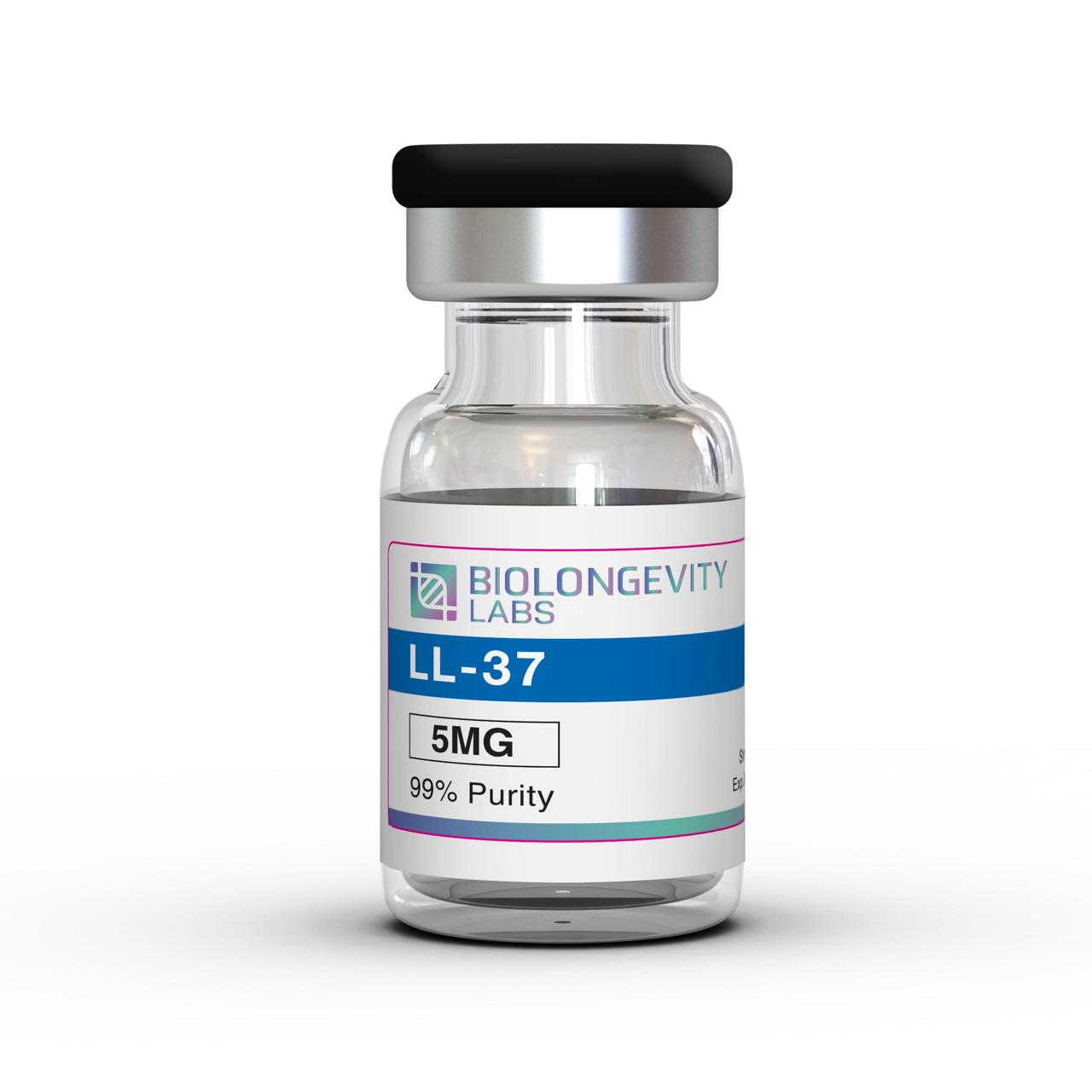
Description
LL-37 (5mg) (CAP-18) is a high-purity, synthetic antimicrobial peptide supplied as a lyophilized (freeze-dried) powder in a single sterile vial. This 5mg vial is intended exclusively for laboratory and scientific research purposes, including in vitro experiments, cell culture studies, animal models, or biochemical assays. It is not approved for human consumption, therapeutic use, medical treatment, veterinary applications, or any clinical purpose by regulatory agencies such as the FDA or EMA. All use must be conducted by qualified researchers following appropriate protocols.
Key Specifications
- Molecular Formula: C₂₀₅H₃₄₀N₆₀O₅₃
- Molecular Weight: 4493.34 g/mol (approximately 4493 Da)
- Amino Acid Sequence: Leu-Leu-Gly-Asp-Phe-Phe-Arg-Lys-Ser-Lys-Glu-Lys-Ile-Gly-Lys-Glu-Phe-Lys-Arg-Ile-Val-Gln-Arg-Ile-Lys-Asp-Phe-Leu-Arg-Asn-Leu-Val-Pro-Arg-Thr-Glu-Ser (LLGDFFRKSKEKIGKEFKRIVQRIKDFLRNLVPRTES)
- CAS Number: 154947-66-7
- Synonyms: LL-37, CAP-18 (Cathelicidin Antimicrobial Peptide 18), hCAP-18 C-terminal fragment, ropocamptide
- Purity: ≥98–99% (verified by HPLC; third-party Certificate of Analysis recommended)
- Appearance: White to off-white lyophilized powder
- Form: Single 5mg vial (requires reconstitution with bacteriostatic water, sterile water, or appropriate buffer for research applications)
- Storage: Lyophilized — store at -20°C or colder, protected from light and moisture for long-term stability. After reconstitution — refrigerate at 2–8°C and use promptly (typically within days to weeks depending on buffer and conditions) to maintain activity. Avoid repeated freeze-thaw cycles.
Research Background and Mechanism
LL-37 is the active, mature form of the human cathelicidin antimicrobial peptide, derived from the C-terminal processing of the precursor protein hCAP-18 (human cationic antimicrobial protein 18 kDa). First identified in the 1990s, it is the only known human cathelicidin and plays a key role in innate immunity. LL-37 is an amphipathic, α-helical, cationic peptide (net charge +6 at physiological pH) that exhibits broad-spectrum antimicrobial activity.
Primary mechanisms of action in research models include:
- Direct membrane disruption — Electrostatic interaction with negatively charged bacterial membranes (e.g., via “carpet-like” or pore-forming mechanisms), leading to leakage and cell death against Gram-positive, Gram-negative bacteria, fungi, and some viruses.
- Immunomodulation — Chemoattraction of immune cells (e.g., neutrophils, monocytes), modulation of cytokine production, and regulation of inflammatory responses.
- Promotion of wound healing and tissue repair — Stimulation of angiogenesis (via VEGF pathways), reepithelialization, collagen synthesis, and extracellular matrix remodeling.
- Antiviral and anti-inflammatory effects — Interference with viral replication cycles and reduction of excessive inflammation in various models.
- Additional pleiotropic roles — Potential influence on cancer biology (pro- or anti-tumorigenic depending on context), amyloid aggregation, and host defense against pathogens.
Preclinical studies (in vitro, ex vivo, and animal models) have explored LL-37’s efficacy against resistant bacteria, its synergy with other antimicrobials, and its contributions to epithelial barrier function, skin wound closure, and innate/adaptive immune bridging.
Potential Research Applications
In controlled laboratory settings, LL-37 is commonly investigated for:
- Antimicrobial mechanisms and host-pathogen interactions
- Innate immunity and inflammation regulation
- Wound healing, tissue regeneration, and angiogenesis models
- Antiviral, antifungal, and antibacterial efficacy (including against biofilms or intracellular pathogens)
- Immunomodulatory effects on immune cells (e.g., mast cells, macrophages)
- Potential roles in cancer biology, chronic inflammatory diseases, and infectious disease models
It shows broad-spectrum activity with low reported cytotoxicity in many models, though high concentrations can affect eukaryotic cells.
Important Notes
LL-37 remains unapproved for any human or clinical use. Research has not led to widespread therapeutic approval, and human clinical data are limited. All products are sold strictly for research use only — not for diagnostic, therapeutic, or personal consumption. Researchers must employ sterile techniques, proper reconstitution (e.g., gentle swirling, avoid vigorous vortexing to prevent aggregation), and safety measures. Always verify purity and identity via independent lab analysis (COA) and adhere to institutional biosafety guidelines.
Reviews
There are no reviews yet.