Description
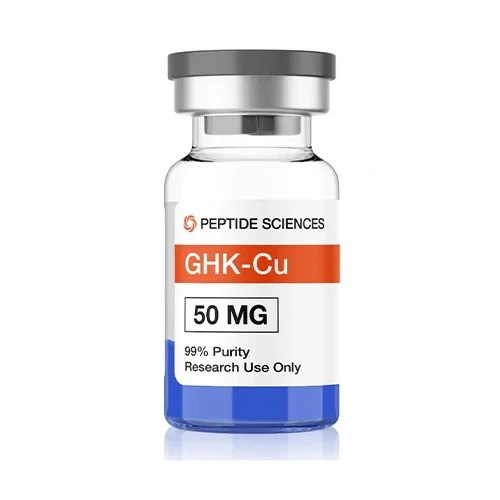
GHK-Cu (50mg) Copper Peptide is a high-purity, research-grade copper-binding tripeptide complex supplied as a lyophilized (freeze-dried) powder in a single sterile vial. This 50mg vial contains GHK-Cu (glycyl-L-histidyl-L-lysine copper complex), intended exclusively for laboratory and scientific research purposes, such as in vitro cell culture studies, animal models, biochemical assays, or investigations into tissue regeneration, skin biology, wound healing, and anti-aging mechanisms. GHK-Cu is not approved for human consumption, therapeutic use, medical treatment, cosmetic formulation, dietary supplementation, or veterinary applications by any regulatory agency (e.g., FDA, EMA). All handling must be performed by qualified researchers following strict laboratory and biosafety protocols.
Key Specifications
- Chemical Name: Copper Tripeptide-1 / GHK-Cu
- Molecular Formula: C₁₄H₂₂CuN₆O₄ (or C₁₄H₂₄CuN₆O₄ depending on hydration state)
- Molecular Weight: Approximately 401.91–403.93 g/mol (copper-bound complex)
- Amino Acid Sequence: Gly-His-Lys (GHK) complexed with Cu²⁺
- CAS Number: 89030-95-5 (commonly cited for the complex) or 49557-75-7 (related)
- Synonyms: Copper Tripeptide-1, GHK-Copper, Glycyl-L-Histidyl-L-Lysine Copper
- Purity: ≥98–99% (verified by HPLC; third-party Certificate of Analysis recommended)
- Appearance: Blue to purple lyophilized powder (characteristic of copper coordination)
- Form: Single 50mg vial (requires reconstitution with bacteriostatic water, sterile water, or appropriate buffer for research use)
- Storage: Lyophilized — store at -20°C or colder, protected from light and moisture for long-term stability. After reconstitution — refrigerate at 2–8°C and use promptly (stability typically days to weeks depending on buffer and conditions). Avoid repeated freeze-thaw cycles.
Research Background and Mechanism
GHK-Cu is a naturally occurring tripeptide first isolated from human plasma in the 1970s. It binds copper(II) ions with high affinity and is found in blood plasma, saliva, urine, and wound fluid. Levels decline with age (e.g., from ~200 ng/mL at age 20 to ~80 ng/mL at age 60). GHK-Cu acts as a signaling molecule and copper carrier, influencing gene expression (resetting aspects of the genome toward a youthful state in some models), extracellular matrix remodeling, and cellular repair.
Key mechanisms explored in preclinical research include:
- Stimulation of collagen, elastin, glycosaminoglycan, and proteoglycan synthesis
- Promotion of angiogenesis (new blood vessel formation) and nerve outgrowth
- Enhancement of wound healing and tissue remodeling via fibroblast activation and metalloproteinase regulation
- Antioxidant activity (e.g., superoxide dismutase-like effects) and reduction of free radical damage
- Anti-inflammatory modulation (downregulation of pro-inflammatory cytokines)
- Potential support for hair follicle stimulation, skin barrier restoration, and extracellular matrix integrity
In vitro and animal studies have shown GHK-Cu to accelerate healing, improve skin elasticity, reduce inflammation, and exert pleiotropic regenerative effects without significant toxicity in tested models.
Potential Research Applications
In controlled laboratory settings, GHK-Cu is investigated for:
- Skin regeneration, collagen synthesis, and anti-aging models
- Wound healing and tissue repair mechanisms
- Hair growth/follicle biology and scalp health studies
- Inflammation resolution and oxidative stress countermeasures
- Extracellular matrix remodeling and angiogenesis pathways
- Broader regenerative biology in aging, injury, or disease models
It exhibits high stability, copper-mediated bioactivity, and broad tissue effects in experimental systems.
Important Notes
GHK-Cu remains unapproved for any human or clinical use. While extensively studied in preclinical contexts (including gene data showing regenerative potential), no large-scale human trials have led to regulatory approval for therapeutic or cosmetic applications. All products are sold strictly for research use only — not for diagnostic, therapeutic, personal consumption, performance enhancement, or topical/cosmetic formulation purposes. Researchers must use sterile reconstitution techniques (gentle swirling to avoid foaming/degradation), proper storage, and biosafety measures. Always verify purity, copper content, and identity via independent lab analysis (COA) and comply with institutional guidelines.
Reviews
There are no reviews yet.