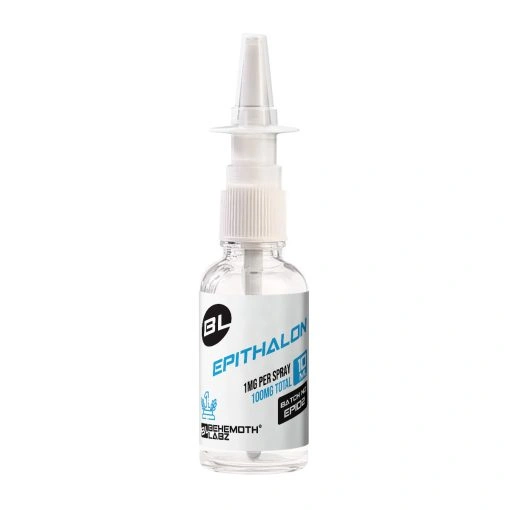
Description
GHRP-2 Nasal Spray is a high-purity, research-grade formulation of Growth Hormone Releasing Peptide-2 supplied as a ready-to-use nasal spray solution in a convenient bottle (commonly 10mg total peptide in 10ml or similar volumes, delivering approximately 100mcg per spray in many research products). This non-invasive delivery method is intended exclusively for laboratory and scientific research purposes, such as in vitro studies, animal models, neuroendocrine experiments, or investigations into growth hormone (GH) secretion, ghrelin signaling, and metabolic regulation. GHRP-2 nasal spray is not approved for human consumption, therapeutic use, medical treatment, performance enhancement, or veterinary applications by any regulatory agency (e.g., FDA, EMA). All use must be conducted by qualified researchers adhering to strict laboratory, biosafety, and ethical protocols.
Key Specifications
- Chemical Name: Growth Hormone Releasing Peptide-2 (Pralmorelin)
- Molecular Formula: C₄₅H₅₅N₉O₆
- Molecular Weight: 817.97–818 g/mol
- Amino Acid Sequence: H-D-Ala-D-2-Nal-Ala-Trp-D-Phe-Lys-NH₂
- CAS Number: 158861-67-7
- Synonyms: GHRP2, KP-102
- Purity: ≥98–99% (verified by HPLC; third-party Certificate of Analysis recommended)
- Appearance: Clear to slightly tinted nasal spray solution in a metered-dose bottle
- Concentration (typical research products): Often 100mcg per spray (e.g., 10mg total in 10ml bottle yielding ~100 sprays)
- Storage: Refrigerate at 2–8°C after opening; protect from light and extreme temperatures. Shake gently before use if required by formulation. Follow specific stability guidelines provided with the product.
Research Background and Mechanism
GHRP-2 is a synthetic hexapeptide and potent agonist of the growth hormone secretagogue receptor (GHS-R1a/ghrelin receptor). It mimics aspects of endogenous ghrelin to stimulate pulsatile GH release from pituitary somatotrophs via Gq/11-coupled signaling, calcium mobilization, and PKC pathways. Unlike GHRH analogs, GHRP-2 acts through a distinct pathway (ghrelin receptor) and can synergize with GHRH for amplified GH pulses. Nasal administration has been explored in preclinical and limited historical human studies for its bioavailability, bypassing first-pass metabolism and providing a non-invasive route.
Key mechanisms in research models include:
- Robust stimulation of endogenous GH secretion (often more potent than some other GHRPs)
- Mild appetite stimulation via ghrelin-like effects
- Potential modulation of ACTH/cortisol in certain contexts
- Influence on energy homeostasis, metabolism, and neuroendocrine balance
Historical studies (e.g., 1990s pediatric short stature research) demonstrated that intranasal GHRP-2 (doses 5–20 μg/kg) elicited significant GH responses (>10 μg/L peak) and was well-tolerated, with some models showing modest growth velocity increases over months of use.
Potential Research Applications
In controlled laboratory settings, GHRP-2 nasal spray is investigated for:
- GH axis dynamics and pulsatile secretion patterns
- Ghrelin mimetic effects on appetite, energy balance, and metabolism
- Neuroendocrine responses in growth-related, aging, or deficiency models
- Non-invasive delivery bioavailability and pharmacokinetics
- Synergistic interactions with GHRH or other secretagogues
- Potential roles in recovery, tissue maintenance, or metabolic studies
The nasal route offers advantages for repeated dosing in models requiring chronic administration without injection.
Important Notes
GHRP-2 remains unapproved for any human or clinical use. While preclinical and early investigational data highlight its potency as a GH secretagogue, no modern regulatory approval exists for therapeutic applications, and human data are limited to historical contexts. All products are sold strictly for research use only — not for diagnostic, therapeutic, personal consumption, or performance enhancement purposes. Researchers must follow precise administration protocols (e.g., metered sprays per nostril), accurate dosing calculations, sterile handling, and biosafety measures. Always verify purity, concentration, and formulation via independent lab analysis (COA) and comply with institutional guidelines.
Reviews
There are no reviews yet.